
Cosmology & Gravitation
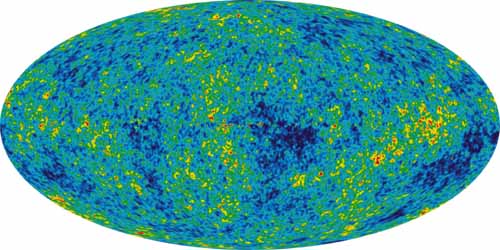
In the field of Cosmology, research ranges from observational to fully theoretical aspects of Cosmological physics. In particular we are interested in: (a) statistical properties of the large scale structures as well as the geometry and topology of the distribution of matter in the Universe, (b) constraints on the cosmological parameters from cosmological data, (c) evolution of perturbations and structure formation in different cosmological models, (d) the nature of dark energy and the possible interaction between dark matter and dark energy, (e) alternative theories (except dark energy) for the accelerated expansion of the universe, and (f) classical and quantum cosmology of scalar fields.
In the field of Gravitational Wave Cosmology, our research focuses on stochastic gravitational-wave backgrounds, a persistent signal that may have been produced by high-energy processes in the very early Universe. Such signals carry information from epochs that electromagnetic observations cannot reach. They therefore provide a direct probe of physics at energy scales far beyond those available in laboratories. Our main instrument for these studies is the Laser Interferometer Space Antenna (LISA), the first space-based gravitational-wave observatory, recently adopted by the European Space Agency, complemented by current ground-based detectors. In particular we are interested in: (a) the detection and characterization of stochastic gravitational-wave backgrounds of cosmological origin, such as those produced by first-order phase transitions, cosmic strings and inflation, (b) all-sky mapping and anisotropies of the gravitational-wave background, (c) the separation of cosmological signals from astrophysical foregrounds generated by unresolved populations of compact binaries, such as Galactic double white dwarfs, stellar-origin black hole binaries and extreme-mass-ratio inspirals, (d) the study of compact binary populations through hierarchical statistical analyses, and (e) Bayesian inference methods, stochastic algorithms, machine learning techniques and pipelines for analysing gravitational-wave observatory data. This work builds on experience gained through contributions to the LISA Pathfinder mission which aimed to test key technologies of LISA and build intuition on instrument calibration and noise modelling. Members of our Center are active in the LISA Consortium, the LISA mission Ground Segment, the ESA LISA Science Team and the Virgo collaboration.